


Nutrition for Colon Cancer Prevention
March 16, 2026
Colon cancer is one of the most common cancers, and research continues to show the important role nutrition and gut health play in prevention and recovery. In this episode of Dishing Up Nutrition, Kara Carper and Brandy Buro explain how diet, inflammation, and the microbiome influence colon health. Learn practical food strategies that support digestive health, including increasing fiber, prioritizing whole foods, and limiting ultra-processed foods.
Listen below, or subscribe to our podcasts through Apple Podcast or Spotify.
Join our Dishing Up Nutrition Facebook Community!
This private group moderated by Nutritional Weight & Wellness nutritionists and nutrition educators provides our Dishing Up Nutrition podcast and radio show listeners with a safe, supportive community to ask questions, share ideas, get inspired, and access special Dishing Up Nutrition bonus content.
Similar Podcast Episodes:
Print Transcript
Transcript:
Kara: Welcome to Dishing Up Nutrition. I'm Kara Carper. I'm a Licensed Nutritionist and Certified Nutrition Specialist here at Nutritional Weight & Wellness. We are excited to unpack a lot of information today. But before we get started, I would like to invite you to share our podcast with someone that you think could benefit from hearing our real food message. The best way to support our podcast is to share it with others to help spread the word.
Now, let's get into today's topic, which is colon cancer. Specifically, we'll be focusing on how to use nutrition to lower your risk of developing colon cancer. This is one of those topics that can feel heavy, but it's also one of those empowering areas in the nutrition science field.
You might have seen in the news that more and more people are getting diagnosed with colon cancer at younger ages. For people in their thirties and forties, it's really hitting closer to home. For a long time, colon cancer felt like something that happened later in life, happened to other people when they were older.
Now we're seeing it in people who are raising families. They still have careers, they're out running marathons, and they're active. Unfortunately, it's not an easy cancer to fight. In fact, colon cancer is the second leading cause of cancer death in the United States overall. It's the highest cancer killer of Americans under the age of 50.
And that shift has understandably made people nervous. It didn't used to be this way. Today we're going to unpack this in a way that feels grounding and not scary. Yes, rates are rising in younger adults, but again, the more knowledge you have, the more empowered you will be to prevent this cancer.
Brandy: That's right.
Kara: So I'd like to welcome my co-host, Brandy Buro. Brandy is a registered and licensed dietitian here at Nutritional Weight & Wellness. You've heard her voice before and it's great to be on together, Brandy.
Brandy: Yeah. Good to be here. Thanks, Kara. And I agree with you. It is my hope that the information we share today is going to help our listeners feel more empowered, more in control of what you can do to control this situation when it comes to your health and reducing your risk of colon cancer.
So whether you are listening because you want to reduce your risk, or maybe you have a family history of colon cancer and you're wanting to be proactive, or perhaps somebody that you care about is navigating a diagnosis, or maybe you are navigating a diagnosis, we really want this to feel informative and supportive.
And like Kara said, you may have heard that colon cancer is happening in people more often now in their thirties and forties. You know, this is not limited to later stage life, and this is not about playing the blame game. Colon cancer is really complex. Genetics do matter. Mutations happen. Environmental exposures can have an impact. The truth is, food patterns over time absolutely influence what is happening in the colon, and that is something that we can have a little more say in.
Kara: And I love that, Brandy, when you mentioned other things that may not be in people's control, like their genetics, some environmental exposures we're just all exposed to, but we have control over what we're putting in our mouth.
Brandy: That's right. And that can be empowering.
Some overview on the colon
Kara: Mm-hmm. Let's zoom out for a second and talk about the colon. It's not just a waste processing tube that collects stool. It's actually alive with trillions of bacteria and the bacteria respond to what you're eating. And this may be hard to believe, but the colon, which is also known as the large intestine, it's five feet long, sometimes even longer than that. So it's a very large organ that houses much of our bacteria and you know, most of that bacteria should be good bacteria.
Brandy: Right. That's our hope.
Kara: I mean, we all have a variety, but it should predominantly be that beneficial bacteria.
Brandy: Right.
Kara: Colon cancer typically begins as small growths, and those are called polyps. And those happen in the lining of the colon or the large intestinal tract. And some, many are harmless. But some can slowly become cancerous over time.
Stats on colon cancer
Brandy: Yeah. And I want to share something that I thought was kind of interesting when preparing for the show. So I looked up what parts of the world have the most colon cancer risk, and which parts of the world have the least cases? The highest rates of colon cancer are actually happening in the most industrialized countries, so think Europe, North America, Australia, New Zealand, parts of East Asia.
So basically the, the higher populated regions of the world. The lowest cases of colon cancer are in less developed parts of the world. And to me, I don't think that comes as much of a surprise just considering what things can increase your risk of colon cancer.
The more developed nations have higher risk patterns from diets that are higher in processed foods, processed meats, low fiber intake, less physical activity, more sedentary lifestyles, and more alcohol use. And this does in part take into account that developed countries are also testing for colon cancer more often. They have more screenings and cancer registries.
And that's going to result in increased reported incidences. But research also shows that as other parts of the world urbanize and adopt western dietary patterns, colon cancer rates also increase. So you can see that there is a connection between diet, lifestyle, and cancer risk.
Kara: Yeah. And you had hit on some of those, like the western world tends to have more processed foods in general.
Brandy: Mm-hmm.
Kara: You know, maybe more low quality meat, low quality fat.
Brandy: Right. More convenience foods that you find some of those lower quality options.
Kara: Yeah. And so that all plays a role as part of the risk factor.
Brandy: Right.
Processed foods increase risk
Kara: So let's talk about why this is when someone eats a heavily processed diet, whether it's refined carbohydrates like chips, popcorn, bread, pasta, things like that. Processed meats would be, you know, just regular conventional, like bacon and sausage. And we'll talk more about that because there are higher quality versions.
Brandy: Right.
Kara: But a lot of people don't know that and maybe they're getting the lower quality processed meats. You'll notice that these foods will have very little fiber. And that can promote bad bacteria. It's kind of a breeding ground for bad bacteria that are not beneficial to thrive. So those bacteria can grow and produce compounds that irritate the lining of the colon.
Quality high fiber foods promote beneficial bacteria to flourish
On the flip side, if someone is eating a lot of produce and a lot of vegetables and plant foods, legumes or beans, nuts and seeds, even, you know, some higher quality whole grains, these foods will promote beneficial bacteria to grow and flourish.
Brandy: Right.
Kara: And the good bugs, let's just call them good bugs, they produce something called butyrate. Butyrate is good healthy fuel for the colon cells. And it really reduces inflammation. It helps abnormal cells to self-destruct before they can mutate and grow into something more dangerous. Or precancerous or cancerous. So our gut bacteria eat that fiber from our diet if we're getting the fiber in.
Brandy: Yep.
Kara: And then that produces butyrate. The colon loves butyrate.
Brandy: Yes. Because the colon cells use butyrate as fuel. Like that's its, that's its meal.
Kara: Mm-hmm. Exactly. But cancer cells process energy differently. So when butyrate builds up inside these abnormal cells or they could be precancerous, it triggers something called cell death. So to kind of summarize, it's feeding the good guys and killing off the bad guys. So we want more foods that are producing this good butyrate.
Brandy: That's right. So if I were just to simplify that whole process, fiber from plants is the prebiotic. Good bacteria is the probiotic. And then butyrate is the post biotic. So it's kind of like an assembly line of sorts.
Kara: I like how you put that.
Brandy: Yeah.
Kara: Easy to remember.
Brandy: Fiber feeds the good bugs. The good bugs produce butyrate, and then butyrate goes on to do wonderful things. It feeds the healthy cells and shuts down the pre-cancerous cells before they have a chance to get out of control. So it's kind of like built in quality control, which is pretty cool.
Kara: And that just goes to show one of the many reasons it's important to prioritize fiber in our diets.
Brandy: Right.
Kara: We like to aim for at least 25 grams of fiber each day. The average adult is getting about half of that 25 grams. Which we're striving for. So, you know, 10 or 12 grams is the average and we just need more to produce butyrate, avoid constipation.
Brandy: Mm-hmm.
Kara: Excrete toxins and things like that. So whole fruits and vegetables, nuts and seeds, legumes and whole grains in their natural form are some good ways to be getting more fiber. And a lot of packaged products like breakfast cereal for example, or even some breads will say made with whole grains, it's a big, you know, advertisement on the front. Those are still heavily processed foods. So we're talking more about foods that are in their true form closest to nature.
Brandy: Right. Because even if they're made with whole grains, that could be a small fraction of the total end product, and it's probably still pretty low in fiber compared to real whole natural foods, right?
Kara: Right. Like even most bread, I'm always curious at the grocery store, like how much fiber is in this bread that advertises high fiber and often it's two grams for a slice. That's very low, by the way.
Brandy: Right. When you think I got to hit 25 or more.
Kara: Mm-hmm.
Having regular bowel movements is critical (& fiber’s role)
Brandy: Yeah. It's not going to come all from that bread. And we, I think we should talk a little bit more about fiber's role in bowel movements and the importance of having a regular bowel movement when it comes to your health and also reducing your risk of colon cancer.
We want to move stool out of the body through a healthy bowel movement, ideally every single day, maybe twice a day. This is our body's way of eliminating toxins. We eliminate toxins out of the gut so that they don't attach to the walls of the colon. These toxins, if they hang around for too long, they can cause some of those dangerous cell mutations that may eventually lead to cancer.
Stool in the colon is basically all the waste products of everything we ingest, plus dead bacteria and cells. So of course it makes sense that we want to excrete this on a daily basis. Again, the longer that stool sits around in the colon, the longer those toxins sit within the stool and are able to cause damage.
Kara: So on that note. Maybe it's worth spending a few minutes talking about how to avoid constipation or what, you know, a couple bullet points on what if someone's listening and going, I'm constipated. I only go have a bowel movement like twice a week.
Brandy: Right.
Kara: What are some tips for them?
Brandy: Mm-hmm. Yeah. Yeah. And just, and just to reiterate, like a daily bowel movement is healthy. That is, it may not be normal for you, but that is the ultimate goal; daily bowel movement. If you're eating every day, should be pooping every day. And if that is not you, what can you do? Fiber is all like obviously a very important part of this picture.
Kara: Mm-hmm.
Brandy: So thinking about how much fiber do you consume in an average day. You might have to track it for a day or two to see where you're at. Aiming again for 25 grams or more every day. Along with that needs to come water. If you're consuming a lot of fiber, you need enough water to kind of match it. A lot of fiber and not enough water could actually cause constipation.
Drink sufficient water to prevent constipation
Kara: Yeah. What do you tell your clients when they say, Brandy, how much water should I be drinking?
Brandy: Mm-hmm. Yeah. It, it kind of depends on the individual and where they're starting. I like to suggest somewhere between 80 and a hundred ounces for most people.
Kara: Mm-hmm.
Brandy: A few people I work with need less than that. How about you?
Kara: Yeah, I, I think that's a great place. Like eight, eight ounce glasses is kind of on the lower end. But I like what you said, like it depends on the individual. If you're someone listening and you only drink three eight ounce glasses of water, you know, you might have to gradually just get into a routine of having like five eight ounce glasses and then six. And work your way up. But I guess 64 ounces is kind of like the low end.
Brandy: Mm-hmm.
Kara: Because every organ in our body is like excreting fluids.
Brandy: Right.
Kara: So it is very easy to get dehydrated just from being alive.
Brandy: Exactly.
Kara: On a daily basis.
Brandy: Yeah. So that old recommendation, 8 glasses of water a day, I think that's a great place to start if you're less than that and then you likely need a little bit more.
Movement can support motility
Movement can also be very helpful to support motility. So if, if that's not part of your normal routine, you know, getting out for a walk or doing a little yoga, some light stretching, something that you enjoy and can be consistent with. Movement does help get things moving.
Kara: Yeah. That, I mean, I think people really notice a difference just from even walking around the neighborhood for two 10 minute walks.
Brandy: Mm-hmm.
Kara: That can really help bowel regularity.
Brandy: A hundred percent.
Kara: And Brandy, I think you and I have chatted in the past, like I have struggled with constipation in the past. I, of course I started with everything that we just talked about: the fiber, the water, movement. A couple of supplements have helped me, especially when I've gotten in situations where it's been a couple days since I've had a bowel movement.
Brandy: Yeah.
Kara: And so magnesium citrate is a mineral that's a wonderful natural stool softener.
Brandy: Yeah. That's often, my go-to for myself too. Just to help support so regularity.
Kara: Sure.
Brandy: Mm-hmm. Sometimes, I would say many times a probiotic is helpful as well.
Kara: That good bacteria.
Brandy: Yep. That beneficial bacteria. So this is something you and I work with one-on-one with clients to decide what is the best probiotic. One that I really like is just kind of a general daily probiotic is the Biotic 7 from Nutrikey. That's a good one a day multi-strain probiotic.
Kara: I like that one. I give that to my daughter. It's simple. It's a very small capsule to swallow. I believe it's got 20 billion colony forming units. It's beneficial bacteria.
Brandy: And your daughter takes that?
Kara: She does, yeah. Yep. I give her one every other day just. She has struggled with constipation as well, and it's really been a game changer. We need to take a quick break. This is Dishing Up Nutrition by Nutritional Weight & Wellness, and our topic today is colon cancer and nutrition and we'll be right back.
-----
Welcome back. You're listening to Dishing Up Nutrition. I'm Kara Carper here with Brandy Buro, Registered Dietitian and Licensed Nutritionist. And our topic today is colon cancer.
Brandy: Yeah. And we've been discussing what are some nutrition tips for preventing or reducing your risk of colon cancer. And so far we've discussed the importance of fiber intake and what fiber does for your digestion supporting regular bowel movements and the role it plays in supporting the health of your intestinal cells.
Quality in meat consumption matters
So we have, yeah, given you some ideas of the role fiber plays and how to prevent constipation. And I think one other thing that gets a lot of attention when thinking about colon cancer is meat and red meat. So I, I'm sure our listeners are curious to hear what our take is on meat consumption. What do you have to say about that, Kara?
Kara: Right. Well, that's in the headlines a lot. Isn't it? Like you see diet, colon cancer, red meat, and so it's possible that you've thought about or maybe you've been advised to cut back on eating meat, especially red meat, to reduce your risk of colon cancer. We get that question from our clients a lot. Isn't red meat bad for me?
Brandy: Yep.
Kara: So we just want to dive in a little bit deeper because it's not like a black and white topic.
Brandy: Mm-hmm.
Kara: Research from the World Health Organization shows that increased colon cancer risk can happen after regular use of higher amounts and it's specifically higher amounts of processed meat consumption. The research showed that if someone was eating seven ounces or more of processed meat every day, that could increase the risk of colon cancer.
Brandy: Right.
Kara: Okay. So let's dive even deeper into that statistic. So quantity is important. Okay? And so the less processed meat the better. And so anything under seven ounces would lower that risk of developing colon cancer. But even more importantly, the study was talking about conventionally raised animals. So bacon, deli meat, hot dogs, sausage, pepperoni. But all of these were processed with additives.
Brandy: Yep.
Kara: And preservatives such as nitrates.
Brandy: Right.
Kara: And we know, right Brandy, that nitrates are carcinogenic. Meaning they have been linked to cancer. So the study didn't give us a lot of surprises.
Brandy: Mm-hmm. Yeah. And that, that would be in line with what we generally recommend is nitrate free.
Kara: Mm-hmm.
Brandy: Uncured processed meat, if you're going to have something like that. And I guess this just kind of confirms what our guidance has been like less is more when it comes to heavily processed meat and heavily processed food.
Kara: Yeah.
Brandy: And that's kind of what I saw the takeaway of this story is less is more and less often is better, so quantity and frequency really gives us an idea of your risk when it comes to processed meats.
Kara: And if you weren't aware that there are, you know, deli meats and bacon and sausage and pepperoni and things like that, that are nitrate free and cleaner without additives, you can look for those. You just have to look for nitrate free.
Brandy: Yep.
Kara: And as always, the fewer ingredients the better on any packaged meat.
Brandy: Right. And I always tell clients this is not about never having like prosciutto or pepperoni or salami on a charcuterie board or something like that, or never having a brat this summer at the barbecue. This is about your daily habits and patterns. So if somebody is eating processed meat every single day, maybe you have like a fast food breakfast sandwich or a deli sub sandwich at lunch, and then you have pepperoni on your pizza in the evening, that repeated exposure matters. It's the daily choices that you make that are going to have an impact on your cancer risk.
Kara: And Brandy, I just thought of something. This is back in the day here at Nutritional Weight & Wellness, when we used to go and do our TV little, we would do segments on Kare11 and some of the local stations. And I remember I went in and my topic was, eat this, not that. And I had to go to a McDonald's fast food.
Brandy: Mm-hmm.
Kara: And I had to get, this was for my props. I got a burger with a bun and fries and a soda. And that was the “don't eat this”.
Brandy: Sure.
Kara: That was the not good example. And then on the flip side, at home, I made my own hamburger.
Brandy: Mm-hmm.
Kara: And it was grass fed and it actually didn't have a bun, but it was on a bed of lettuce with tomato and onion. Then I roasted my own potatoes in avocado oil.
Brandy: Perfect.
Kara: And had an unsweetened iced tea as the beverage, so they looked similar.
Brandy: Mm-hmm.
Kara: But that's just an example of two very different kinds of red meat.
Brandy: And really focusing on quality.
Kara: Right.
Brandy: Yeah. Yeah. It makes a big difference. And that's what we're talking about here.
Kara: So we would approve of that second burger that was made at home.
Brandy: Exactly, exactly.
Avoid burnt meat when possible
Kara: Also, high heat cooking or smoking meat can create harmful compounds. So, you know, while grilling is great, especially here in the Midwest, when it gets nice in the springtime, we advise to cut off any parts that have burnt on the meat as much as possible.
Brandy: Mm-hmm. Yeah. One simple thing you can do and still enjoy the, the occasion, and again, this is about cumulative exposure over many years. It's not just one meal that's going to make or break a situation. If you are a longtime listener of Dishing Up Nutrition, or you've been following Nutritional Weight & Wellness, you know that we always talk about the importance of including animal-based protein in your normal balanced meal and we don't want to discourage you from eating meat. It's truly the quality that matters.
We get so many essential nutrients from high quality meats, and it's a very efficient way to get your protein needs met. So when we talk about quality, we're referring to grass fed beef, pasture raised eggs and poultry, organic, grass fed dairy, and wild caught fish. So there is a big difference in your health when it comes to natural animal-based proteins versus those that are heavily processed.
Kara: Let's review what we've talked about so far. What are some priorities you can make with your diet to lower your risk of colon cancer? Well, first we've discussed how fiber is protective in so many ways. High fiber diets are associated with decreased risk of colon cancer and that is huge.
Brandy: Absolutely.
Kara: So if you have not been thinking about your fiber or paying attention to your intake, this is a good time. Like Brandy said, really track what you're getting for fiber. You can do that in an app.
Brandy: Mm-hmm.
Kara: Or you can, you know, just be looking it up online. It's very simple to find out what each specific food would have for fiber content. And we want to aim for at least that 25 grams of fiber per day. We actually have a really great kind of a newer product called Sun Fiber, and I've been putting a scoop of that in my smoothie.
Brandy: Mm-hmm.
Kara: And it mixes really well. It doesn't have a flavor.
Brandy: Right.
Kara: Really, it doesn't smell like anything or taste like anything. And it gives a nice extra boost of fiber. Because sometimes it is challenging to get 25 grams in a day.
Brandy: I have some clients that put that in a glass of water. You know, it's that flavorless and colorless that it's, it's pretty simple to take. And we are always talking about avoiding ultra processed foods for general health, but especially for preventing your risk of colon cancer. So this is just another example. These foods tend to be very low in fiber and high in simple carbs or refined carbs. Also, they come along with added sugar and factory made fats and other additives that can be counterproductive.
And when those foods dominate your diet, you're going to see more inflammation. You're also going to see more insulin resistance. If you think about what we've talked about with eating more fruits and vegetables for that fiber content, those foods also come along with vitamin C and other antioxidants that are going to help fight off those toxins and reduce inflammation.
On the flip side, diets that are high in ultra processed foods, refined carbohydrates, added sugar, and low in the diversity of different kinds of plants, those are the kind of things that are going to promote inflammation and insulin resistance, both of which are linked to higher cancer risk over time.
Insulin resistance can promote higher prevalence of cancer
Kara: You mentioned insulin resistance. It's that chronically elevated insulin that can promote cell growth signals, and cancer cells are cells that respond to these growth signals. There is a population study showing that insulin resistance and type two diabetes, which are, you know, people who have type two diabetes are insulin resistant.
Brandy: Right.
Kara: And there were several cancers, including colon cancer that were associated with these higher levels of chronic insulin. And if you are one of our regular listeners, you've heard us talk about balancing blood sugar before; not a surprise. And there's a lot of reasons for that, whether it's brain health, heart health. So by focusing on keeping your blood sugar balanced, that naturally will reduce elevated insulin levels and insulin production.
Brandy: Right.
Kara: And it's just good for overall wellbeing, whether it's mental health, physiological health.
Brandy: Mm-hmm.
Kara: Cancer prevention.
Brandy: Yeah, blood sugar control is connected to so many different aspects of our health that it's worth the effort to figure out how to do that.
Kara: Mm-hmm.
Brandy: Especially when it comes to preventing cancer. And I think it's important to mention that high insulin does not cause cancer, but it can act like a fertilizer of sorts that can promote further growth. And we know that cancer development is multifactorial. So it's not just the blood sugar, it's not just the insulin, but it can include genetic mutations, chronic inflammation, environmental exposures, your immune function and your hormone balance.
But the message that we really want to relay here is that while there are so many factors that are out of our control, diet is something that most of us have some control over, and that's why we're always educating on how to balance blood sugar to improve insulin sensitivity.
Kara: Now I just want to insert something in case someone is listening and you've had colon cancer or maybe you know someone with colon cancer. None of this is anyone's fault. It's not like, oh, you've been doing all these wrong things and that led to cancer. Cancer is very complex. There are people who are eating real whole unprocessed foods and moving their bodies;
Brandy: Mm-hmm.
Kara: Getting fiber, drinking the water and still have had a diagnosis.
Brandy: Right.
Kara: In fact, that happened to my neighbor; picture of health.
Brandy: Yeah.
Kara: You know, and she was just as shocked as anyone. And she did go through chemotherapy for a year and she's cancer free, so it's a very good outcome.
Brandy: Mm-hmm.
Kara: But there are people, you know, who are doing everything and still get that diagnosis. So we want to, we're educating about nutrition just to help you to feel empowered. But it doesn't mean that everything is explainable and makes sense.
Brandy: Yeah. It's, I always like to say it's not going to hurt anything. It creates more resiliency for whatever comes your way.
Kara: Right. And it just really overall will lower the risk factors.
Brandy: Absolutely.
Kara: For colon cancer.
Eat real food carbohydrates that pack a fiber punch
Brandy: That's right. And if somebody today is listening and thinking, just tell me what matters the most. Well, this is what I would tell them. Eat real food. Eat real food carbohydrates, AKA plants with every single meal so that you get that fiber.
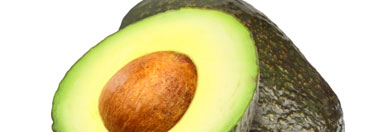
So this could mean adding some berries and some chia seeds with breakfast, maybe in a smoothie. Then with lunch, have a salad with lots of different vegetables, a little avocado, and some quinoa. A lot of, you know, avocado is one of my absolute favorite fiber boosters.
A lot of people don't realize half of an avocado has about six grams of fiber. Really easy way to, you know, help meet your fiber goal. Maybe use that other half of avocado as a dip with some vegetables for a snack, and then for dinner, a couple cups of roasted vegetables, maybe with half a cup of lentils or wild rice. All of this, in addition to a little bit of protein and healthy fat with every meal, it's going to give you the fiber you need, but also the balance for that blood sugar control.
Kara: We also talked about limiting processed meats and not having them as part of your regular diet, but just thinking of them as occasional foods. And I had given my example of an eat this, not that. You know, don't eat the McDonald's fast food burger, but it's okay to have the organic pasture raised, the grass-fed beef that you cook in your home.
So that's just an example of really avoiding the fast food meats. And some of those pizzas that have like meat lovers and the ground beef, that's all going to be lower quality processed meat. And then avoid anything with the nitrates or cured meats. Cut off the burnt part if you have control over that and stay away from smoked meats.
Brandy: Mm-hmm.
Kara: Other examples of real proteins that are not considered processed are eggs, plain yogurt, leftover chicken breast. Or even, you know, the dark meat is great as well; the thighs and the wings and the legs. You could have that, you know, have that chicken on your salad and that could be the protein for lunch.
Brandy: Absolutely.
Kara: For dinner, perhaps you make a sheet pan of vegetables and then you have baked fish or pork tenderloin and you know, these are all just examples of real food that's not coming from a box…
Brandy: Mm-hmm.
Kara: …a can or a package or a bag. Yeah, exactly. So there's lots of options and lots of ways to prepare healthy animal proteins.
Brandy: Mm-hmm. Definitely. And we did mention exercise briefly when we were talking about tips to prevent constipation, but daily movement is very important. Increasing physical activity is linked with lower colon cancer risk. So it's important to find a way to move your body every day, hopefully something that you enjoy, something that you can be consistent with so that it is part of your lifestyle.
Be proactive with colon cancer screening
Kara: And remember to talk to your doctor about colon cancer screening if haven't already. I know I mean, that's how my neighbor found out.
Brandy: Right.
Kara: And she was really on top of it. I think she had her first colonoscopy at 50.
Brandy: Mm-hmm.
Kara: And that is when they found stage one colon cancer. And so she would not have known about it because she was just in for a routine visit and wasn't having symptoms.
Brandy: Yeah.
Kara: And so speak with your provider about screenings and a lot of times if it's caught and they find polyps, the polyps can be removed before they become cancerous.
Brandy: Mm-hmm. That's right. So when you start thinking about your risk of colon cancer and nutrition, know that food shapes your internal environment every single day. Food is information for your body. It shapes which bacteria thrive. It shapes your immune signaling. It shapes cellular repair. The nice thing is that your microbiome responds very quickly to changes in your diet. So even small shifts towards improving your diet can help change that internal landscape and get to work with improving your health and reducing your risk.
Kara: Although this is a serious topic, we hope that it also gives you nutrition, education and knowledge to feel more empowered. You know, colon cancer is one of the cancers that's most influenced by lifestyle patterns and diet.
Brandy: Yeah.
Kara: And so that means you know what you're doing when you're younger matters.
Brandy: Mm-hmm.
Kara: And if you're listening, because you are currently navigating a diagnosis of colon cancer, just know that these small changes will still be powerful and make a difference. Don't feel like you need to overhaul everything overnight and we're here for you if you need some support and guidance along the way as well.
Brandy: Right. Yeah. That's where meeting with a dietitian can be very helpful because it can seem overwhelming to come up with a diet plan for something this serious. It is our job to help it feel more realistic for you. We'll come up with simple, attainable steps that fit in with where you are right now. So let us help you, guide you with a one-on-one session.
You can learn more about nutrition counseling at our website, weightandwellness.com, or you could call us at (651) 699-3438 and we can also help you navigate what your insurance coverage looks like. So many clients that I meet with have nutrition counseling as a benefit with their insurance plan, but they didn't realize it until they got the ball rolling with Nutritional Weight & Wellness.
Check On Insurance Coverage For Nutrition Counseling!
Kara: Yeah, we're seeing more and more coverage with a variety of different insurance companies.
Brandy: Yeah. That's great. That's great.
Kara: Well, we want to thank you for listening today. Our goal at Nutritional Weight & Wellness is to help each and every person experience better health through eating real food. It's a simple, yet powerful message, and it really does make a difference. Have a great day.
